Companion & Colony
An independent written reference on cat welfare in Southern Ontario — the practical and the political. How feline overpopulation actually works and what stops it. What a no-kill policy commits a shelter to. How to feed, vaccinate and house a cat properly. And why the animals living in the seam between the wild and the domestic are there in the first place.
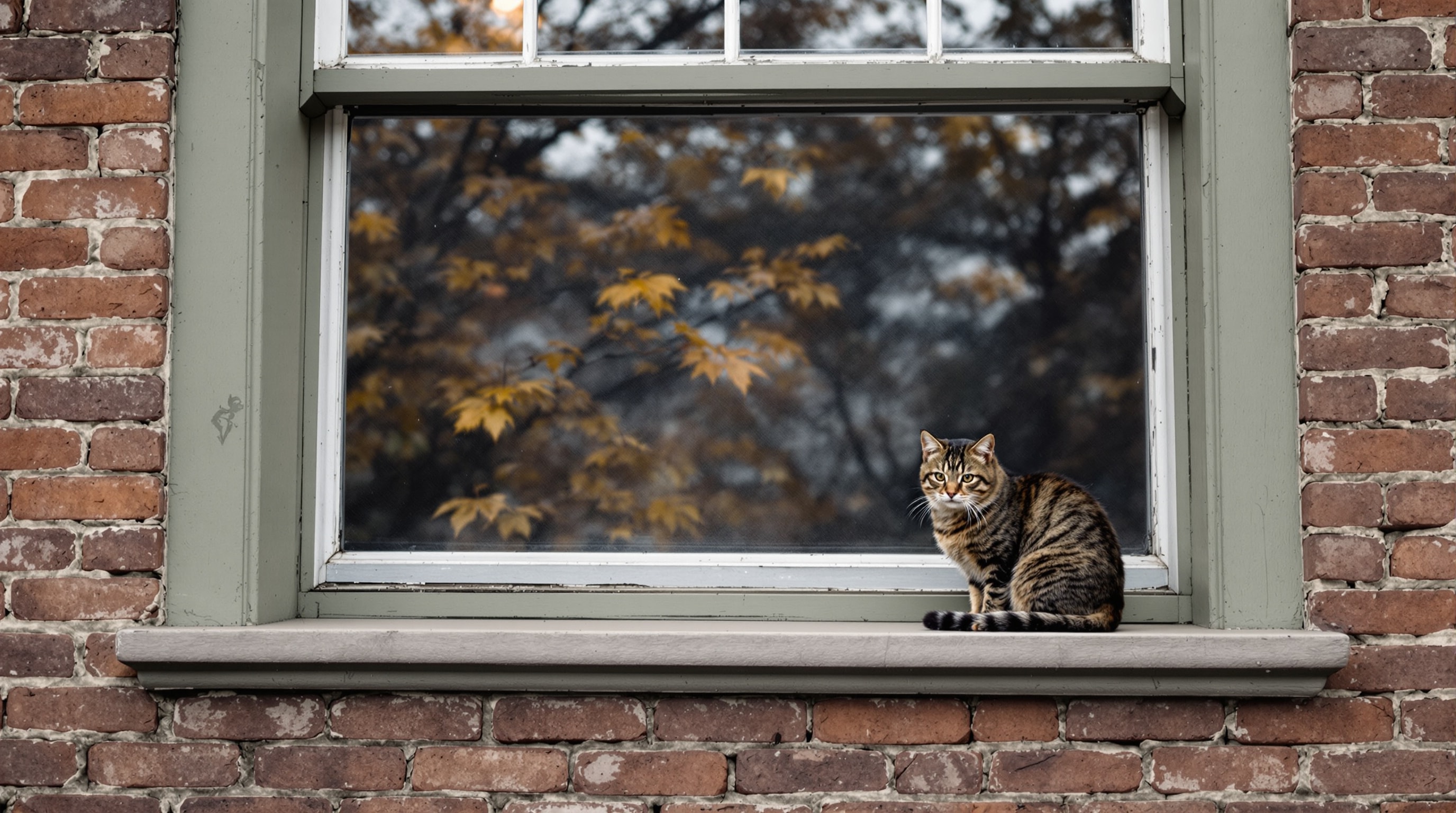
Two subjects run through everything here, and the name is meant to hold both of them. Companion is the cat in the house — fed, vaccinated, clawed, and in most cases outliving the plans that were made for it. Colony is the cat behind the plaza, in the laneway, under the deck: unowned, unaltered, and reproducing on a curve that no adoption programme can outrun. Most welfare writing addresses one and ignores the other. They are the same problem observed at two distances.
Where to start
Cat rescue
The arithmetic of feline overpopulation, why sterilisation has to come before rehoming, what actually happens to a surrendered cat, and why the bottleneck is never the supply of adopters.
Neighbourhood cats
Trap-neuter-return as a street-level practice: how to survey a colony, trap humanely, get the female done first, and build winter shelter that actually works.
Cat care library
Three long pieces on the decisions that shape a cat's life — nutrition, vaccination and declawing — written against current veterinary sources.
The no-kill movement
What no-kill means as a policy rather than a slogan, the programmes that make it achievable, and how the argument played out in Ontario municipalities.
The case in one paragraph
An unspayed female cat can produce up to three litters a year. Follow that forward and a single unaltered pair, with their descendants, accounts for a population that grows exponentially — while adoption capacity grows, at best, linearly. Everything that has ever worked in cat welfare follows from that mismatch. Sterilisation before rescue. Colonies managed where they stand rather than removed. Money spent on the mother rather than on the fourth litter of kittens. The guidance from Alley Cat Allies on trap-neuter-return sets out the modern version of the same logic.
Why Southern Ontario
The Greater Toronto Area is a useful place to think about this, because it compresses every version of the problem into a short drive. Dense downtown laneway colonies. Suburban subdivisions built on top of coyote and fox habitat within living memory. Rural properties where barn cats have been a fact of life for a century and were never anybody's project. Municipal animal services operating under wildly different policies from one boundary to the next.
It also has real winters, which changes the practical advice. A colony that survives comfortably in a mild climate needs insulated shelter, straw rather than fabric bedding, and a water source that will not freeze. The neighbourhood cats page covers that in detail.
Beyond the domestic cat
The second half of this reference is about the animals that were already here. Southern Ontario has lost natural cover steadily for decades, and the coyotes, foxes, skunks and raccoons now living in the middle of the region are not invading it — the region was built on top of them. Framing them as pests gets the causation exactly backwards. See urban wildlife, and the ethical argument underneath all of it in our credo.
Reference pages
- Adopting a rescue cat — what the commitment involves and how to choose an animal that suits the household you actually have.
- Foster homes — the part of the system that is always the constraint, and what fostering asks of you.
- Animal news — how to follow welfare policy in Ontario without relying on outrage cycles.
- In memoriam — on grieving a companion animal, and on making the last decision well.
- Contact — corrections and questions about this reference.
What this site is, and what it is not
This is an independent editorial reference. It is not a rescue organisation, a charity, or a shelter. It is not affiliated with, endorsed by, or connected to any animal-welfare organisation, past or present. No money is solicited or accepted here. No animals are placed, held or advertised through this site. There is no membership, no application and no volunteer sign-up.
If you have found a cat, a litter or an injured animal in Ontario today, contact your municipal animal services or the Ontario SPCA and Humane Society, and look for a local trap-neuter-return group — most communities have one. If you want a general, non-commercial reference on feline health, the Cornell Feline Health Center is the best free English-language source there is.