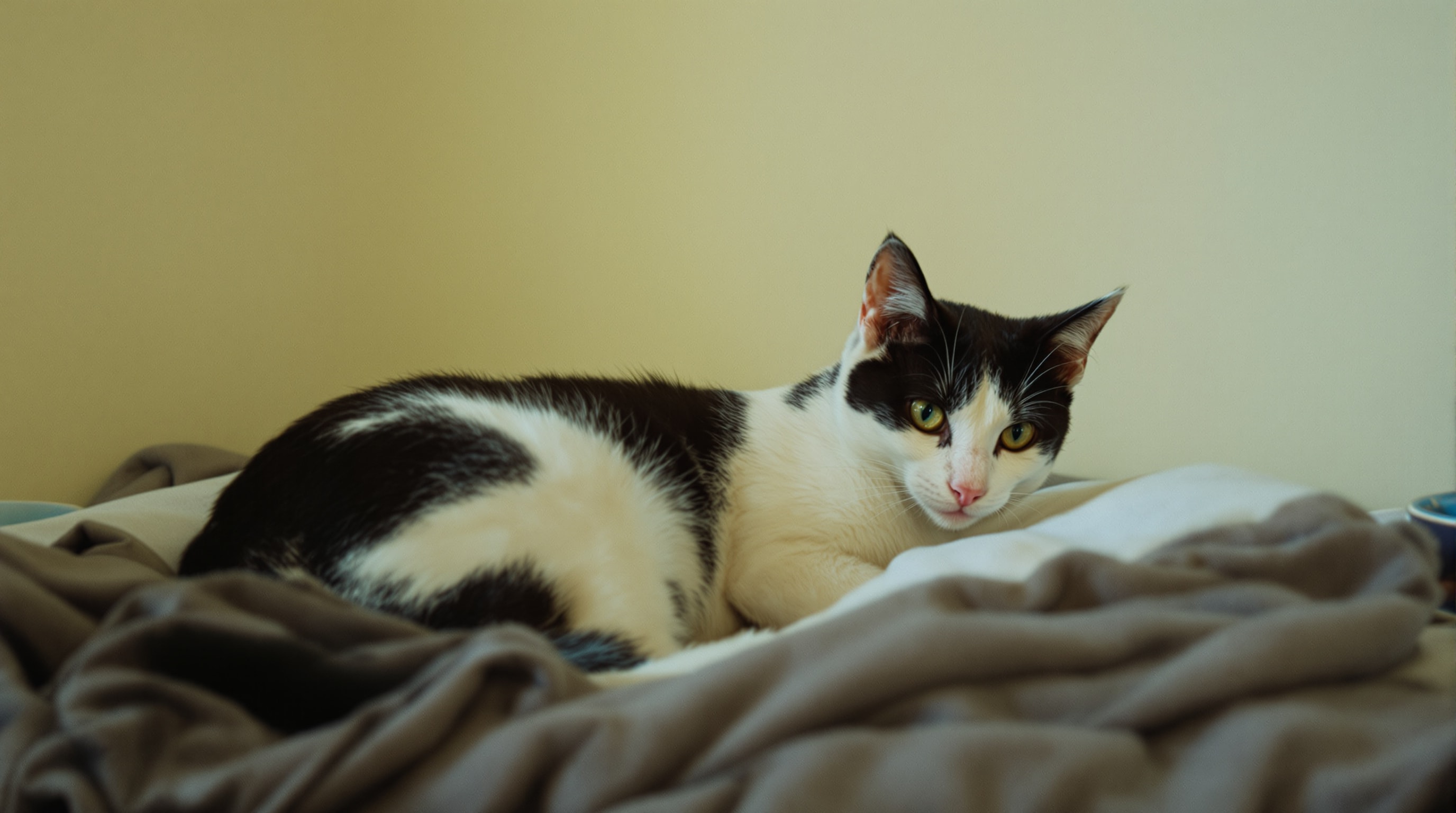
Cat Rescue
Cat rescue is the part of animal welfare that attracts the most attention and explains itself the least well. It looks like a sequence of individual stories. It is actually a losing race against a compound growth rate, and almost everything effective in the field follows from understanding that first.
The arithmetic that drives everything
Cats let outdoors unaltered will mate. The offspring fend for themselves — many die of starvation, cold, traffic, predation or human interference. Those that survive reproduce in turn.
Female cats can produce up to three litters a year, of as many as six kittens each, and can conceive again while still nursing. Compound that and the projected totals get spectacular; the specific number depends on which survival assumptions you feed the model, and the widely-quoted figures are usually optimistic about kitten survival. What does not depend on assumptions is the shape. It is exponential.
Adoption capacity, meanwhile, grows at best linearly. It is bounded by households, by disposable income, and by the number of people willing to take on a twenty-year commitment in a given year. No rescue group has ever out-adopted an exponential curve, and none ever will.
Which is why sterilisation comes first, and why a welfare budget spent on spaying one colony matriarch does more measurable good than the same money spent rehoming her fourth litter. Conventional practice is to sterilise before sexual maturity — commonly around five to six months, though many clinics and shelters now do it earlier — and the same applies to indoor cats, because an unaltered cat will eventually get out and once is enough.
What happens to a cat that comes in
A functioning rescue intake looks roughly the same everywhere. The cat is assessed and, where possible, scanned for a microchip. It is vaccinated, treated for parasites, and sterilised if it is old enough. Whatever veterinary care it needs is arranged. Then, because a suitable permanent home is rarely available on the day, it goes into a screened foster home until one appears.
Groups operating a strict no-kill policy carry a further consequence: animals that are elderly, or that need permanent medical management, may never be adoptable and simply stay. A small rescue that has been running for a decade will typically be maintaining a standing population of long-term residents who cost money every month and will never leave. That population is not a failure of the model; it is the model, honestly accounted for. What it does mean is that veterinary bills, not adoption fees, dominate the finances.
The pound-pull problem
Rescues frequently take older or medically compromised cats out of facilities that would otherwise euthanise them as unadoptable. The results are consistently better than expected — these animals are disproportionately gentle, well-socialised and easy to live with, having usually been someone's pet at some point.
They are also slow. They take longer to place and cost more to restore to health first, and programmes of this kind are usually the first thing suspended when money or foster capacity runs short. That pattern is worth stating plainly because of what it reveals: the binding constraint in cat rescue is almost never public willingness to adopt a healthy young cat. It is the number of households prepared to hold a difficult animal for three months while it recovers.
Cats given up by their owners
Owner surrender absorbs a large share of any urban rescue's resources, and the animals arrive in a state that is routinely misread.
A surrendered cat is not merely relocated. From its point of view it has been removed from its territory and abandoned by the people it was bonded to. Some hide and stop eating. Some become defensive, hissing at everything and everyone. Cats in perfect physical health have refused food for days on end after a surrender.
In a high-volume shelter those animals are recorded as having behavioural problems, and a behavioural label is what gets a cat killed. Given individual attention — a quiet room, a predictable routine, an unhurried person, and in some cases assisted feeding under veterinary direction — most of them turn out to be ordinary cats who are frightened and have stopped trusting people. Recovery has a recognisable arc: refusal, then tolerance, then one day eating unprompted, and shortly after that play. The ASPCA cat behaviour guidance covers the same ground in clinical terms.
There is a prevention point here that rescues make constantly and owners rarely hear before it is relevant. A cat can live past twenty. Adopting one is a commitment measured in decades, across house moves, relationships, new babies and new jobs, and the honest time to think about that is before the animal arrives.
Feral, stray, and the difference that decides the plan
Not every free-roaming cat wants a living room, and the single most common error in amateur rescue is assuming otherwise.
A stray is a socialised cat that has been lost or abandoned. It can usually be re-homed, sometimes immediately. A feral cat has not been socialised to people during the critical early window and, as an adult, generally cannot be — confining it in a house is distressing for the cat and unworkable for the household. The difference between feral and stray cats is set out well by Alley Cat Allies, and it determines the entire plan of care.
For genuinely feral adults, the humane and effective answer is trap-neuter-return: sterilise, vaccinate, ear-tip for identification, and return the animal to a managed colony where it is fed and sheltered. Kittens caught young enough are a different case and can usually be socialised. That work is described on neighbourhood cats.
If you are looking at a cat right now
This is a written reference. It cannot take in an animal, arrange veterinary care or place a cat. If you are dealing with a colony, a litter, or an injured or sick cat in Ontario, contact your municipal animal services or the Ontario SPCA, and find a local trap-neuter-return group — they are usually the fastest route to low-cost sterilisation and will often lend traps. If you are considering taking a cat on yourself, adopting a rescue cat sets out what the commitment really involves.