Adopting a Rescue Cat
Adopting a cat is a commitment measured in decades — well-cared-for indoor cats routinely reach eighteen, and twenty is not remarkable. This page is about making that decision with your eyes open: what a good adoption process looks like from the adopter's side, how to choose an animal that suits the household you actually have, and what the first fortnight is really like.
This site does not place animals and has no cats available. It is a written reference. For animals currently looking for homes in Ontario, start with your municipal shelter, a local rescue group, or the Ontario SPCA adoption pages.
What a good adoption process looks like
Adopters are sometimes surprised by how much a rescue asks. An application form, a conversation about your household, questions about other pets, occasionally a home visit or a reference, and an adoption agreement with conditions attached. It can feel like being vetted for a mortgage.
The friction is deliberate and it protects you as much as the animal. A group that places a semi-feral adult with a family that wanted a lap cat has produced a failed adoption, a returned or abandoned animal, and a household that will never try again. Screening is how a rescue avoids that.
Common conditions in an adoption agreement, and what they mean:
- Indoor-only, or supervised outdoor access. Outdoor cats have markedly shorter life expectancies and are the principal vector for the diseases the cat has just been vaccinated against.
- No declawing. Standard, and increasingly a legal matter as well as an ethical one. See declawing.
- Return-to-rescue. If the placement fails at any point in the animal's life, the cat comes back to the group rather than going to a classified ad. This is a good clause and you should want it.
- Sterilisation. Almost always done before placement; if a kitten is placed intact, the agreement will specify a date.
Ask questions in return. What is known about this cat's history? How does it behave with other cats, with dogs, with children? What is it eating now? Has it had any medical treatment, and is anything ongoing? Is it litter trained, and on what substrate? A rescue that cannot answer basic questions about an animal it has been fostering is a warning sign.
Choosing an animal that fits
The commonest mistake is choosing on appearance and age rather than on temperament and household fit.
Kittens are not the easy option. They are exhausting, destructive, need three or four meals a day at first, and their adult temperament is not yet visible. An adult cat's personality is a known quantity on the day you meet it — which for most households is worth far more than cuteness.
Consider taking two. Two young cats entertain each other, which reduces the attention-seeking and destructive behaviour that single kittens direct at furniture and at you. If a rescue describes a pair as bonded, take the pair or take neither; separating bonded cats causes real and lasting distress.
Older cats are badly undervalued. A seven- or ten-year-old cat is usually litter trained, calm, past the destructive phase, and will often bond very quickly. Its temperament is entirely legible. The trade-off is a shorter time together and a higher chance of veterinary costs sooner, and that is a real trade-off — but a decade with a settled adult is not a consolation prize.
Be honest about your household. Small children who cannot yet read an animal's signals need a robust, tolerant cat, not a nervous one. Existing pets need a cat with a known history around other animals. Long working hours suit a self-sufficient adult pair, not a single kitten. Allergies in the household need resolving before, not after.
What it costs
The adoption fee is the smallest number involved, and it usually represents a fraction of what the rescue has already spent on sterilisation, vaccination and parasite treatment.
What follows is ongoing: food, litter, an annual veterinary examination and vaccination, parasite prevention, and dental care, which is the cost most owners fail to anticipate and which becomes significant in middle age. Then there is the unplanned category — a urinary obstruction, a dental extraction, a chronic condition such as kidney disease or hyperthyroidism that requires lifelong medication and monitoring. Renal disease in particular is common in older cats and is managed rather than cured.
Deciding in advance how you will handle a four-figure veterinary bill — savings, insurance, or a clear-eyed understanding of your limits — is part of adopting responsibly. Making that decision in a waiting room at 2am is the worst possible time.
Before the cat arrives
Set up a single quiet room: litter tray, food and water well away from the tray, a hiding place, a scratching post, and a bed. Cat-proof it — secure loose wires, remove any lilies from the house entirely, check that windows and balconies cannot be fallen from, and confirm no houseplants are toxic.
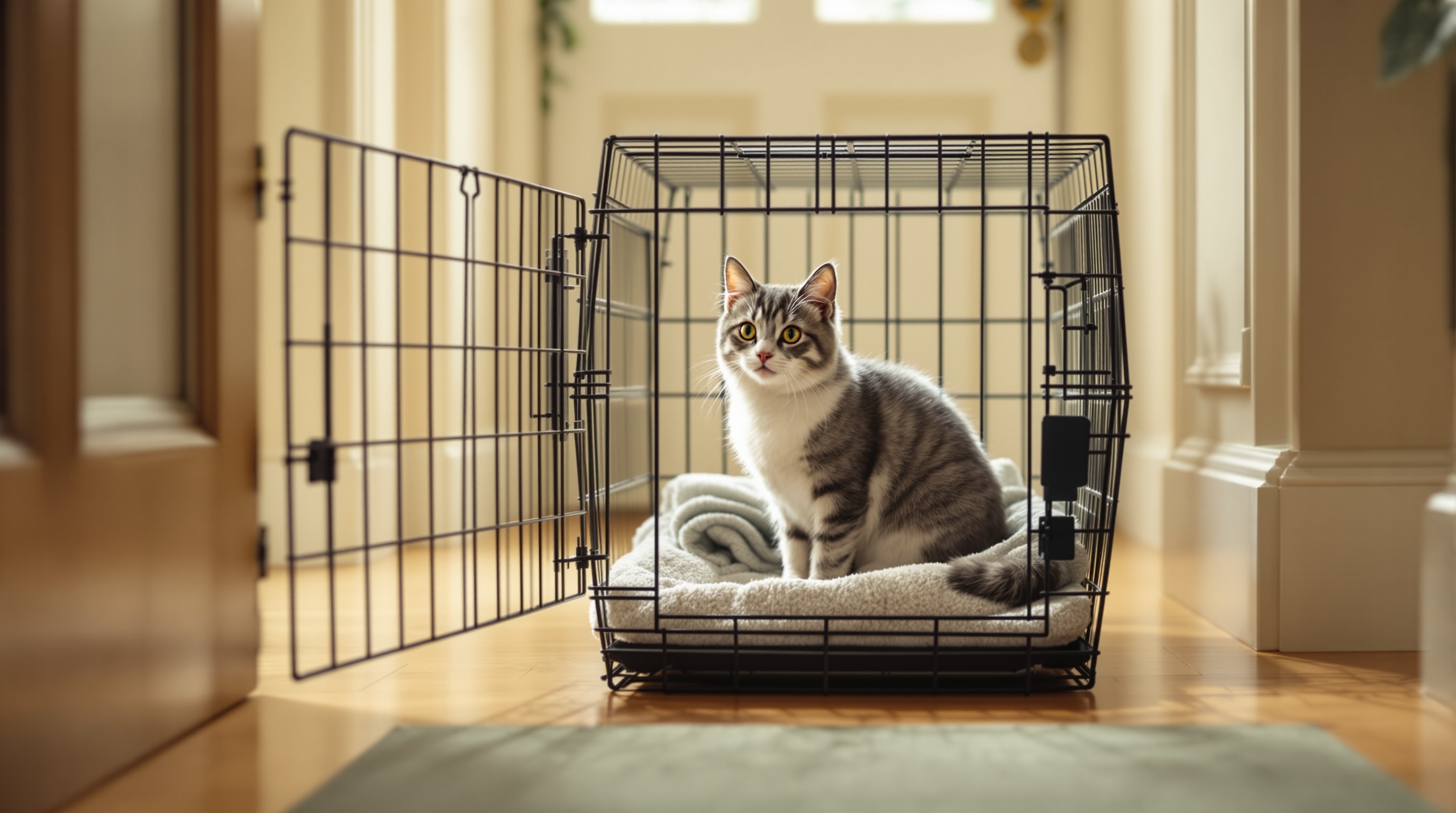
Have a carrier, and leave it out with the door open from day one so it becomes furniture rather than a signal that something bad is about to happen.
The first fortnight
Expect a hidden cat. Most rescue cats spend the first days under the bed or behind the sofa, and this is normal rather than a sign of a bad match.
Keep the cat in the single room at first. Sit in there, quietly, doing something else — reading works well — without approaching. Let the cat come to you; a cat that decides on its own to investigate you will settle far faster than one that is pursued. Keep the food it was eating at the rescue for the first week or two, then transition slowly. Do not have visitors round to meet it.
Expand the territory gradually once the cat is eating, using the tray and coming out while you are present. If there are resident cats, introduce by scent and through a closed door first, then with a barrier, then supervised, over one to several weeks — rushing this is the leading cause of long-term inter-cat tension.
Two things to raise with a veterinarian rather than wait out: a cat that has not eaten in twenty-four to forty-eight hours, and a cat that is not using the litter tray at all. General settling-in guidance is well covered in ASPCA general cat care.
The long view
Book a veterinary examination in the first week or two, both to establish a baseline and to start the relationship before you need it urgently. After that, the schedule is unglamorous and it is what determines the outcome: an annual physical for an adult, moving to twice yearly from about ten or eleven, with the life-stage detail set out in the AAFP feline life stage guidelines.
If you are not ready for a permanent commitment but want to help, fostering is the single most useful thing a household can do — and it is where rescue capacity is always short.