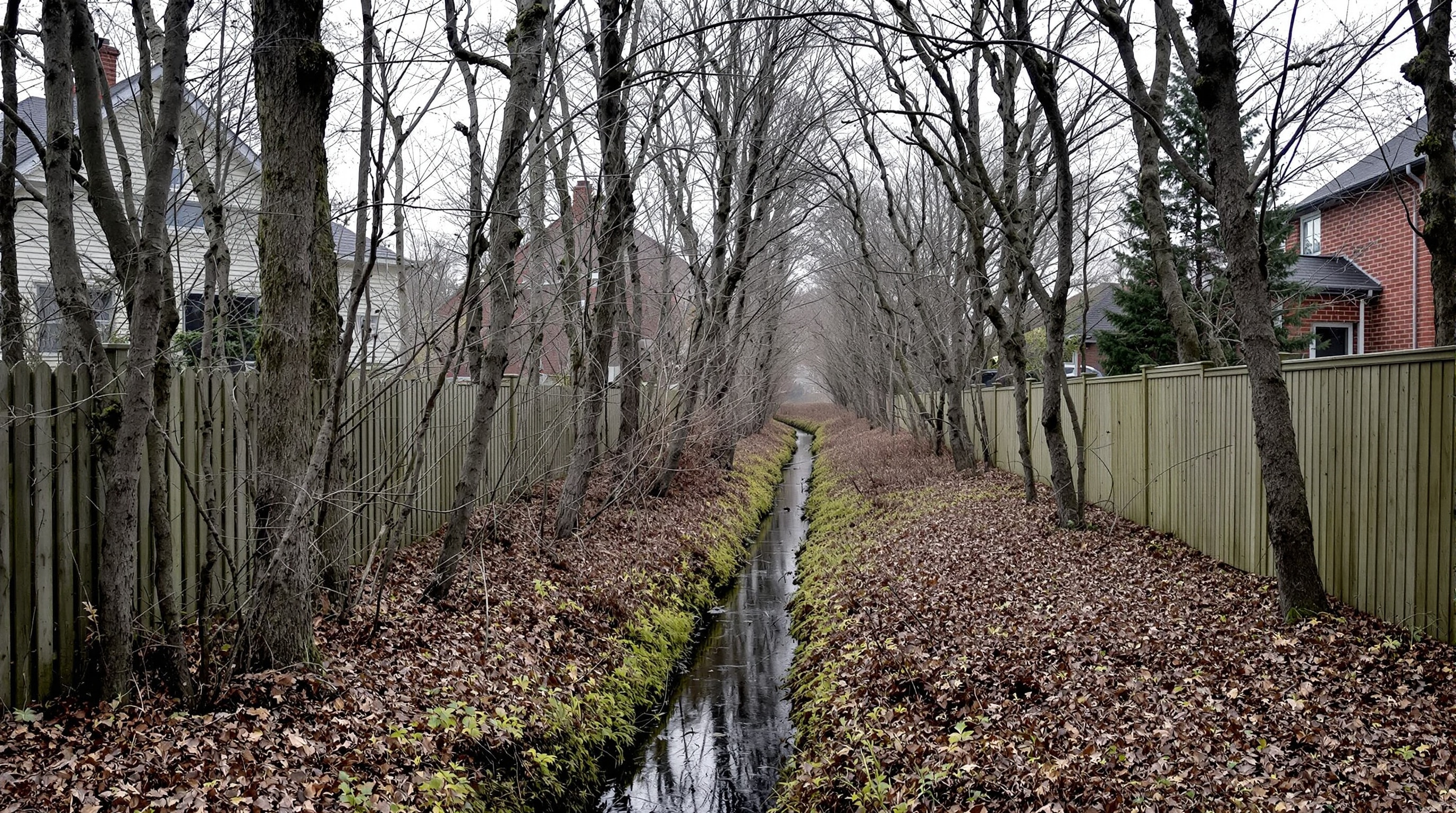
Urban Wildlife
There are coyotes, foxes, skunks and raccoons in the middle of the Greater Toronto Area. The standard framing is that they are moving in. The accurate framing is that the region was built on top of them, and the animals now living along its ravines and rail corridors are the remnant of what was there first.
What actually happened to the land
Southern Ontario sits in the Mixedwood Plains, the most biologically productive and most heavily converted ecozone in the country. Forest became farmland through the nineteenth century; farmland became subdivision through the twentieth and twenty-first. Wetlands were drained on a scale that is difficult to picture now — across much of the settled south, the great majority of original wetland has been lost.
What remains is fragmented. Fragmentation matters more than raw area, because a population confined to an isolated patch is vulnerable in ways that the same number of animals spread through connected habitat is not: no recolonisation after a local die-off, no gene flow, and edge effects that reach deep into small woodlots. This is why ravine systems and river valleys carry so much of the region's remaining wildlife. They are the only continuous corridors left.
The pest framing, and why it fails
Treating an animal in a city as a pest incident produces a predictable sequence: removal, a brief absence, and recolonisation by the next animal to find the same food and the same shelter. The habitat is what attracts; the individual is interchangeable.
That is not a moral argument, it is an operational one. Removal works on the animal and leaves the cause in place, which is why the same attic gets a new raccoon and the same yard gets a new skunk. The same logic appears in cat welfare, where removing colonies from a productive location reliably produces a new colony — see neighbourhood cats.
What works instead is unglamorous and permanent:
- Remove the food. Secure bins, no fallen fruit left, no pet food outdoors, no deliberate feeding. Deliberate feeding of coyotes in particular is the single strongest predictor of the bold behaviour that later gets an animal killed.
- Close the shelter. Cap chimneys, screen soffits and vents, and close gaps under decks and sheds — after confirming nothing is inside, and never during the spring denning season, when sealing an entrance walls in dependent young.
- Use one-way exclusion rather than trapping where an animal is already resident. Relocation is frequently illegal, frequently fatal to the animal, and does nothing about the opening it came through.
- Keep cats indoors. This protects the cat from coyotes and vehicles, and protects birds and small mammals from the cat. Both effects are well documented.
The provincial rules on capturing or relocating a wild animal damaging property set out the legal position on trapping and relocation in Ontario, and the Humane Society on coexisting with coyotes is the best practical treatment of the species that generates the most alarm and the least actual risk.
Coyotes specifically
Coyote sightings generate more municipal correspondence than every other urban wildlife issue combined, and the fear is largely disproportionate to the risk. Attacks on people are rare; the realistic risk is to unsupervised small pets.
The behaviour that produces problems is habituation, and habituation is caused by food. A coyote that has learned to associate people with a meal loses its avoidance, approaches, and is then destroyed as a public safety matter. Every stage of that sequence is downstream of someone leaving food out.
Hazing — making yourself large, loud and unpleasant when a coyote approaches, rather than retreating quietly — is the standard recommendation, and it works because it restores the avoidance that feeding erodes. It is also worth knowing that culling does not durably reduce coyote numbers: the species compensates with larger litters and earlier breeding, which is why removal programmes tend not to produce the results promised for them.
Protecting land, which is the only permanent answer
Behaviour change at the household level reduces conflict. It does not create habitat. The only durable intervention is putting land beyond the reach of clearance, and in Ontario that happens through several mechanisms:
- Land trusts acquire and hold natural land in perpetuity, and Ontario has an active network of regional trusts alongside national organisations.
- Conservation easements let a private owner retain the land while permanently restricting what can be done to it, with the restriction binding on all future owners.
- The Ecological Gifts Program, administered federally, provides significant tax recognition for donating ecologically sensitive land or an easement over it to a qualified recipient.
- Provincial designations such as the Greenbelt, the Oak Ridges Moraine and Niagara Escarpment plans, and Provincially Significant Wetlands, restrict development at a landscape scale — and, being creatures of policy rather than of title, they change with governments. That is precisely why privately held protection matters alongside them.
A serious caution applies to all of this: protection has to be structured properly to survive. Informal assurances, handshake arrangements and unregistered restrictions do not bind a future owner. Ontario Nature works with the regional land trust network and is the right first call for anyone thinking seriously about this. This site accepts nothing, holds nothing and is not a recipient organisation of any kind — it is a written reference, and land protection is a matter for a qualified conservation body and a solicitor.
The underlying point
Every one of these animals is where it is because of decisions people made about land. That places the obligation on the same side as the capability, which is the argument set out in our credo. Coexistence is not a favour extended to wildlife. It is the minimum owed by the party that rearranged the place.