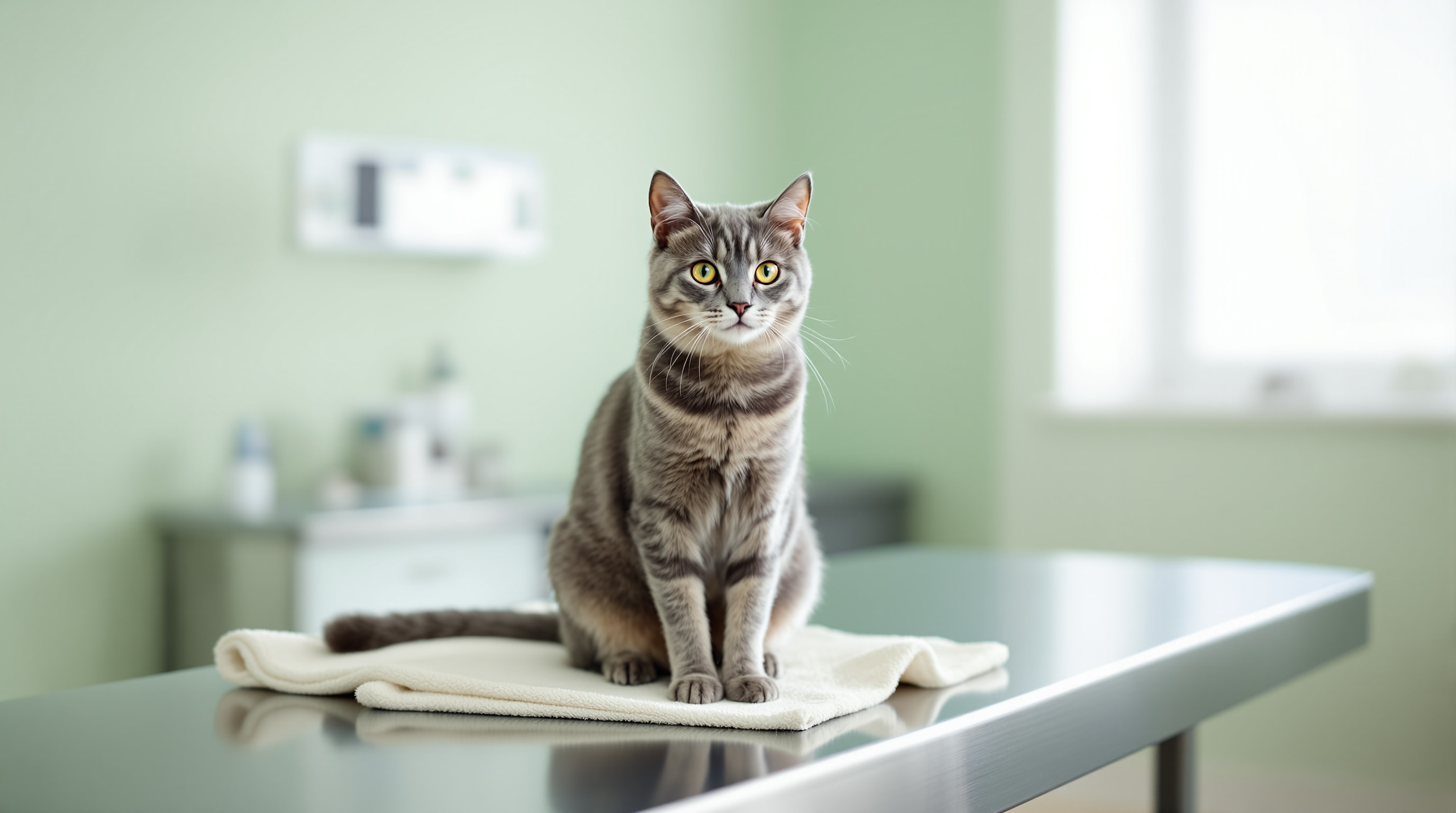
Vaccinating Your Cat
For decades the default was every vaccine, every cat, every year. That default was never built on evidence about how long immunity lasts — and it has since been dismantled, not by campaigners but by the veterinary profession's own guideline committees working from duration-of-immunity data. What replaced it is considerably better, and it asks the owner to know a little more.
The two questions that decide everything
Modern feline vaccination guidance turns on two questions, asked of an individual cat rather than of cats in general:
- Is this vaccine core or non-core? Core vaccines protect against diseases that are severe, widespread, or transmissible to people. Every cat should have them. Non-core vaccines protect against diseases whose risk depends on how and where a particular cat lives.
- What is this cat's actual exposure? An indoor-only single cat in an apartment, a barn cat, a cat in a busy foster household and a cat that roams a suburb do not face the same risks, and should not automatically receive the same schedule.
That framework comes from the AAHA/AAFP feline vaccination guidelines, with an international counterpart in the WSAVA global vaccination guidelines. Both are free to read and both are written for the general practitioner rather than the specialist.
The core vaccines
For cats, core protection covers three viral diseases — usually delivered as a single combination injection — plus rabies wherever it is present or legally required.
- Feline panleukopenia, a parvovirus. Highly contagious, exceptionally durable in the environment, and frequently fatal in kittens. This is the disease that makes the combination vaccine non-negotiable.
- Feline herpesvirus type 1, a principal cause of upper respiratory disease. Vaccination reduces severity rather than reliably preventing infection, and the virus persists for life once acquired, recurring under stress.
- Feline calicivirus, the other major respiratory pathogen and a contributor to oral disease. Again, vaccination moderates disease more than it prevents infection.
- Rabies, core wherever rabies is present. It is invariably fatal and transmissible to humans, which makes it a public-health matter as much as a veterinary one; in many jurisdictions it is also a legal requirement, and Ontario has long required rabies vaccination for cats.
Non-core vaccines
The principal one for cats is feline leukaemia virus. Current guidance treats it as core for kittens — young cats are markedly more susceptible, and nobody can predict a kitten's future lifestyle — and thereafter as a risk-based decision for adults. A cat that goes outdoors, or that lives with a positive cat, is a candidate. A settled indoor-only adult in a single-cat household generally is not.
Other vaccines exist for particular situations, including certain bacterial respiratory pathogens relevant in dense multi-cat environments. They belong to a conversation about a specific cat in a specific setting, not to a default schedule.
Why the intervals changed
For years many labels said "annually", and practice followed. That recommendation was largely historical precedent rather than a finding about duration of immunity, and by the late 1990s enough evidence had accumulated to show that protection from the core modified-live vaccines lasts considerably longer than a year.
The guidance changed accordingly. The current shape is roughly this: a kitten series beginning around six to eight weeks and repeated every three to four weeks until at least sixteen weeks, a booster at one year, and thereafter core revaccination at intervals of three years or more for a low-risk adult. Non-core vaccines, where indicated at all, are given more frequently because their duration of immunity is shorter.
It is worth being precise about who drove that change, because the internet's account of it is usually backwards. It came from within the profession, from the vaccination task forces of the veterinary associations, on the strength of their own duration-of-immunity studies. A profession that voluntarily reduced the frequency of a billable procedure on its own evidence is not a profession acting to protect vaccine revenue.
Adverse events, honestly stated
Vaccines are medical interventions and they carry risk. Most reactions are mild and short-lived: a day or two of lethargy, mild fever, reduced appetite, or soreness at the injection site. Immediate hypersensitivity reactions are rare and constitute an emergency — facial swelling, hives, vomiting, collapse or difficulty breathing within minutes to hours of an injection means going straight back to the clinic.
The reaction specific to cats is feline injection-site sarcoma, an aggressive tumour arising at an injection site. It is rare; published estimates vary and sit broadly in the range of about one to ten cases per ten thousand vaccinated cats. It is also not exclusive to vaccines — other injected products have been implicated — which is part of why the mechanism is thought to involve local inflammation rather than any particular antigen.
It is nonetheless the reason for two practices you may notice at your clinic. Vaccines are given in standardised, distal sites such as a limb or the tail rather than between the shoulder blades, so that a mass can be identified and, if necessary, excised with a wide margin. And any lump at a vaccination site that persists beyond about three months, that grows, or that exceeds roughly two centimetres should be biopsied rather than watched.
The existence of this risk is an argument for vaccinating deliberately — the right vaccines, at the right intervals, in the right sites, for the cat in front of you. It is not an argument for leaving a cat unprotected against panleukopenia, which kills reliably and painfully. Weighing a rare complication against a common fatal disease is the whole of the decision, and it is the step that anti-vaccination arguments consistently skip.
What about indoor-only cats
Indoor living reduces exposure. It does not eliminate it. Panleukopenia virus is remarkably hardy in the environment and travels indoors on shoes and clothing. Cats escape. Cats go to boarding facilities and to clinics. A new cat arrives, or a foster does. And rabies vaccination is frequently a legal requirement regardless of lifestyle.
The practical effect of indoor status is on the non-core side of the schedule — feline leukaemia vaccination for a settled indoor adult, for instance — rather than a reason to skip the core vaccines. The AVMA guidance on vaccinations addresses the lifestyle question directly.
Titre testing
Antibody titre testing measures circulating antibody and can demonstrate protection, particularly for panleukopenia. It is a legitimate tool, especially for a cat with a history of adverse reactions or an adult of unknown vaccination history. Two caveats: a titre predicts protection far better for panleukopenia than for the two respiratory viruses, and it does not substitute for rabies vaccination where that is required by law. Treat it as something to discuss with your veterinarian, not as an automatic alternative.
How to have the conversation
Ask which vaccines your cat is receiving and whether each is core or non-core. Ask what interval is being used for the core vaccines, and why. Ask where the injection is being given. Ask what is being recommended on the basis of your cat's actual lifestyle rather than a standing protocol. A good clinic will welcome all four questions, because they are precisely the questions the current guidelines were written to answer.